
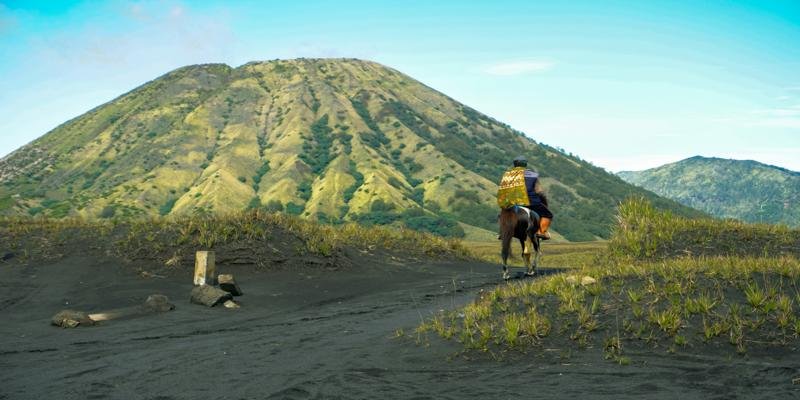
The Tengger people, or Tenggerese, are an indigenous ethnic group living in the highlands of East Java, Indonesia, particularly around Mount Bromo, an active volcano in the Bromo Tengger Semeru National Park. They are one of the few remaining Hindu communities in Java, preserving their faith and traditions despite the spread of Islam across most of the island.
Origins and History
The Tenggerese are believed to be descendants of the Majapahit Empire (13th–15th century), which once ruled much of Southeast Asia. When the empire declined and Islam spread across Java, many Javanese Hindus fled to the mountains, where they continued their religious and cultural traditions.
The name Tengger comes from the combination of Roro Anteng and Joko Seger, the legendary founders of the Tengger community. According to folklore, they were a royal couple who sought refuge in the mountains and established the Tenggerese society.
Culture and Traditions
The Tenggerese maintain a unique blend of Hinduism and animist beliefs, distinct from Balinese Hinduism. They worship Hindu gods such as Shiva, Brahma, and Vishnu, as well as ancestral spirits and natural forces.
One of their most famous traditions is the Yadnya Kasada (or Kasada Festival), held annually at Mount Bromo. During this festival, the Tenggerese make offerings of livestock, fruits, and crops by throwing them into the volcano's crater to honor their ancestors and seek blessings from the gods.
Way of Life
- Most Tenggerese are farmers, growing potatoes, cabbage, onions, and corn in the fertile volcanic soil.
- Unlike many Javanese communities, they speak a dialect of Javanese that is more archaic and lacks hierarchical speech levels.
- The Tenggerese are known for their simple and egalitarian society, with fewer rigid social structures compared to mainstream Javanese culture.
Modern Challenges
While the Tenggerese have preserved their culture for centuries, modernization and tourism around Mount Bromo are influencing their way of life. Many Tenggerese now participate in the tourism industry, working as guides, jeep drivers, and homestay hosts.
Despite these changes, the Tenggerese remain one of the last pockets of Hinduism in Java, keeping alive the legacy of the once-great Majapahit civilization.
Would you like to know more about their festivals, legends, or daily life?