
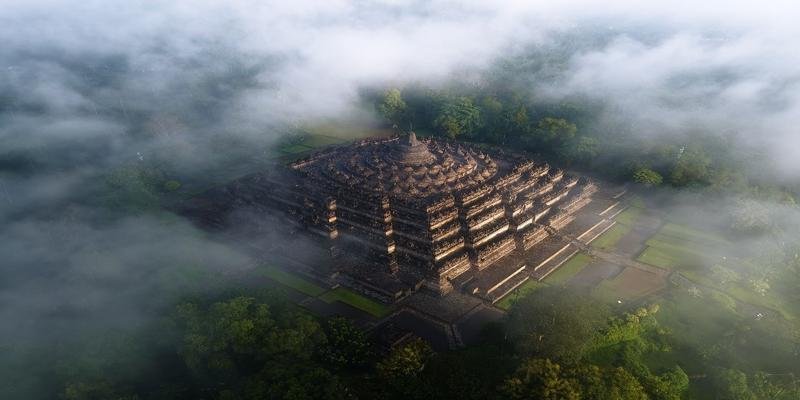
Borobudur is a massive Buddhist temple located in central Java, Indonesia. It is one of the most famous and significant archaeological and cultural sites in Southeast Asia. Constructed in the 9th century during the reign of the Sailendra dynasty, Borobudur is a UNESCO World Heritage site and one of the largest and most well-preserved Buddhist monuments in the world.
Key features of Borobudur:
- Architectural design: The temple is a pyramidal structure with nine stacked platforms, including six square platforms and three circular ones. At the top is a large central dome. The monument is designed to represent the Buddhist concept of the universe, with each level symbolizing a different stage in the path to enlightenment.
- Stupas: The temple is famous for its large number of stupas (dome-like structures), many of which contain statues of the Buddha. The central stupa, located at the highest point of the temple, is empty and may symbolize the attainment of Nirvana.
- Reliefs: Borobudur is adorned with more than 2,600 relief panels and over 500 statues of the Buddha. The reliefs depict various scenes from Buddhist teachings, including the life of the Buddha, stories from Buddhist Jataka tales, and symbolic representations of the universe and the journey toward enlightenment.
- Cultural and religious significance: Originally used for Buddhist pilgrimage and meditation, Borobudur is a center for Buddhist practices. Although it fell into obscurity after the decline of the Sailendra dynasty, it was rediscovered in the 19th century and is now an important site for both religious devotion and tourism.
- Restoration: In the 1970s, a major restoration effort funded by UNESCO helped preserve the temple, which had suffered from centuries of neglect and environmental damage.
Today, Borobudur continues to be an iconic symbol of Indonesia's rich cultural heritage and a popular destination for both tourists and pilgrims.